Chapter 08
Seasons
Balance doesn’t mean every week looks the same. Some stretches of life are rightly lopsided — and a season is how you tell W52 you chose the lopsidedness.
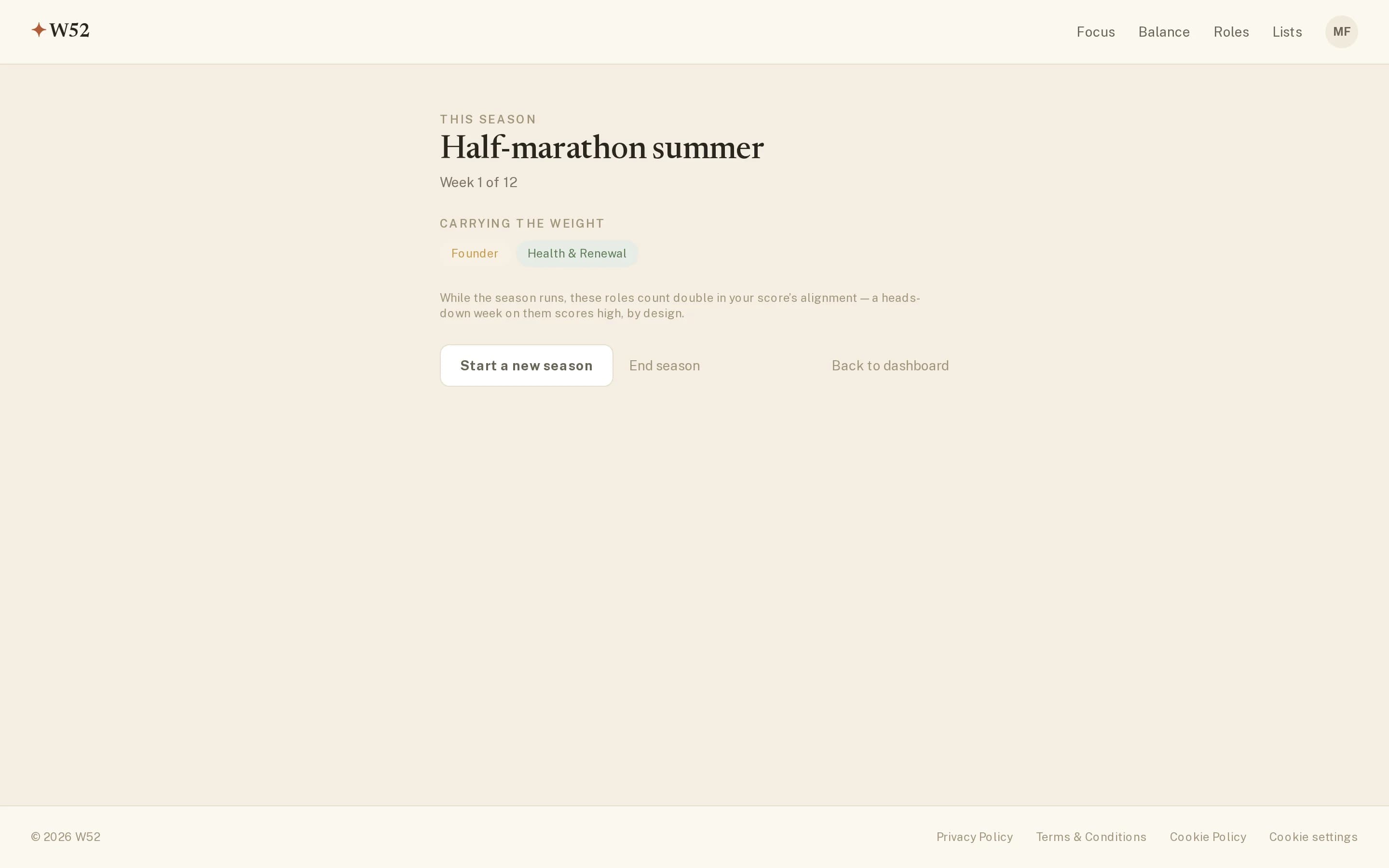
A training block before a race. The eight weeks around a launch. A new baby. In seasons like these, a scorekeeper that keeps whispering your other roles are slipping is worse than useless — it’s nagging you for keeping a promise. A W52 season fixes that: give the stretch a name, pick the one or two roles carrying the weight, set a length in weeks.
What a season changes
- The score’s idea of alignment. While the season runs, its focus roles count double — a heads-down week on them scores high, by design.
- The record. Weeks are stamped with their season, so when you look back at the year you can see that dip was the launch rather than a mystery.
- Nothing else. Your roles, tasks and plans are untouched. A season is a lens, not a reorganisation.
Ending well
Seasons have a declared length — up to twenty-six weeks — and an explicit end. That’s the quiet discipline of the feature: a season that never ends is just imbalance with a nicer name. When it’s over, end it, let the neglected roles come back to the table, and if life demands it, start another with open eyes.
That’s the whole method. The last chapter covers the practical bit — getting set up in five minutes.