Chapter 02
Missions & objectives
A role without a direction is just a label. Each role carries one honest sentence about who you want to be in it — and a few objectives that would make that sentence true.
The mission: one sentence, in your voice
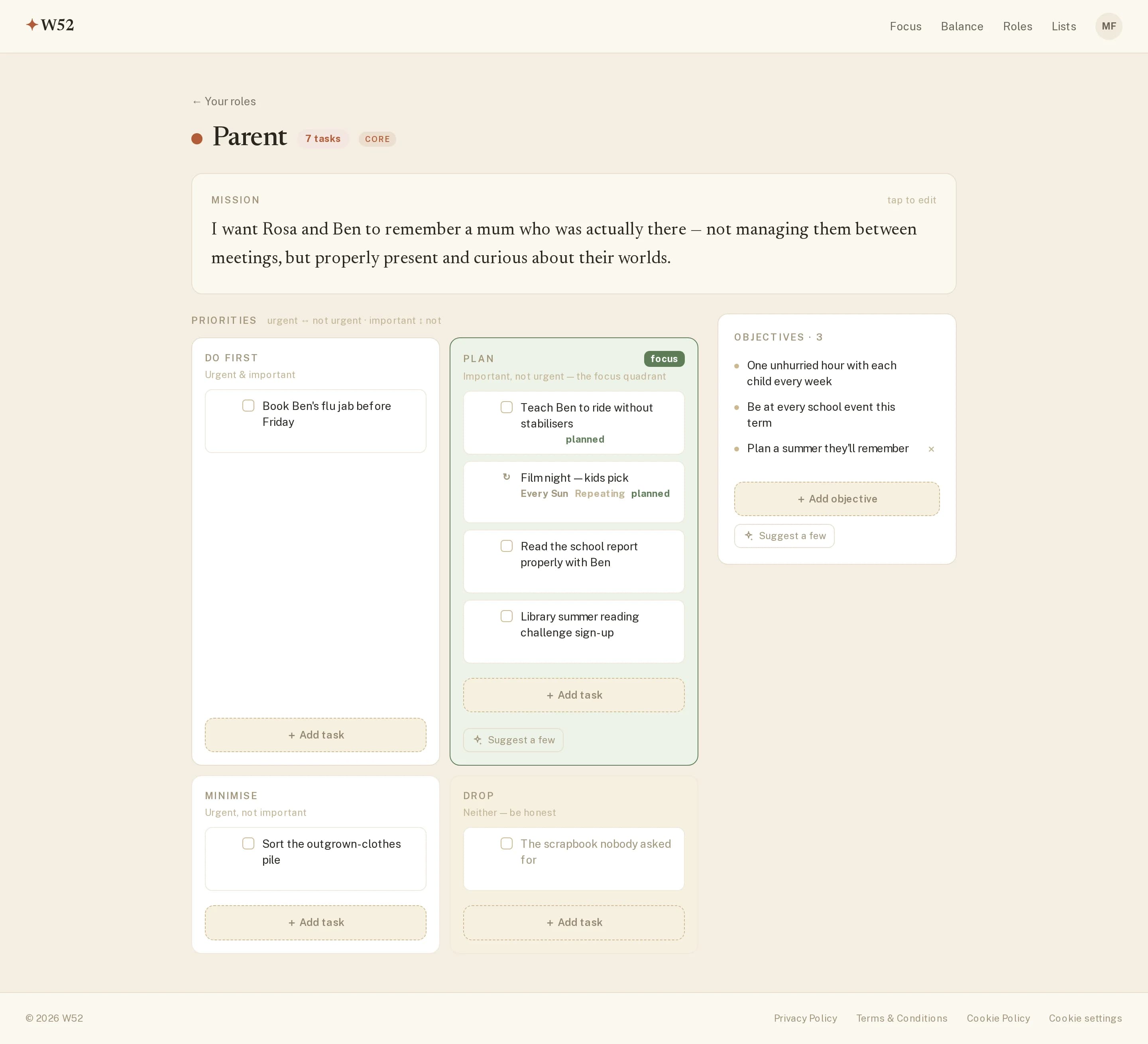
A mission in W52 is not a corporate vision statement. It’s a sentence you’d recognise as yours — “I want Rosa and Ben to remember a mum who was actually there.” It sits at the top of the role’s page, where you’ll re-read it every time you plan, and its job is simply to make the next decision easier. When two tasks compete for Saturday morning, the sentence usually knows which one wins.
Write it fast and badly first. A mission you revise in month three is a sign the practice is working, not that you got it wrong.
Objectives: the few outcomes that matter
Under the mission sit two or three objectives — concrete, finishable outcomes for the months ahead. Where the mission is a direction, an objective is a destination:
- “One unhurried hour with each child every week” — a rhythm you can keep or notice slipping.
- “Sign two retainer clients by autumn” — done or not done, by a date.
- “Run three times a week, building to 18 km” — progress you can feel.
Keep the list short on purpose. Three objectives per role across five roles is already fifteen live commitments — a full life. Tasks can link to an objective, so weeks later you can see whether the things you actually did served the things you said mattered.
With direction set, the day-to-day work needs sorting. On to tasks and the four quadrants.